- Home
- About Us
- Sports
- Fan Stuff
- Pet Stuff
- Labour Protection
- Promotion Items
- Blog
- Contact Us
Leave Your Message
Choosing the right Welfare Products in 2026 requires more than following colorful online trends. Buyers want items that improve daily comfort, safety, accessibility, and emotional wellbeing. They also expect responsible sourcing, clear warranties, and evidence behind every major claim.
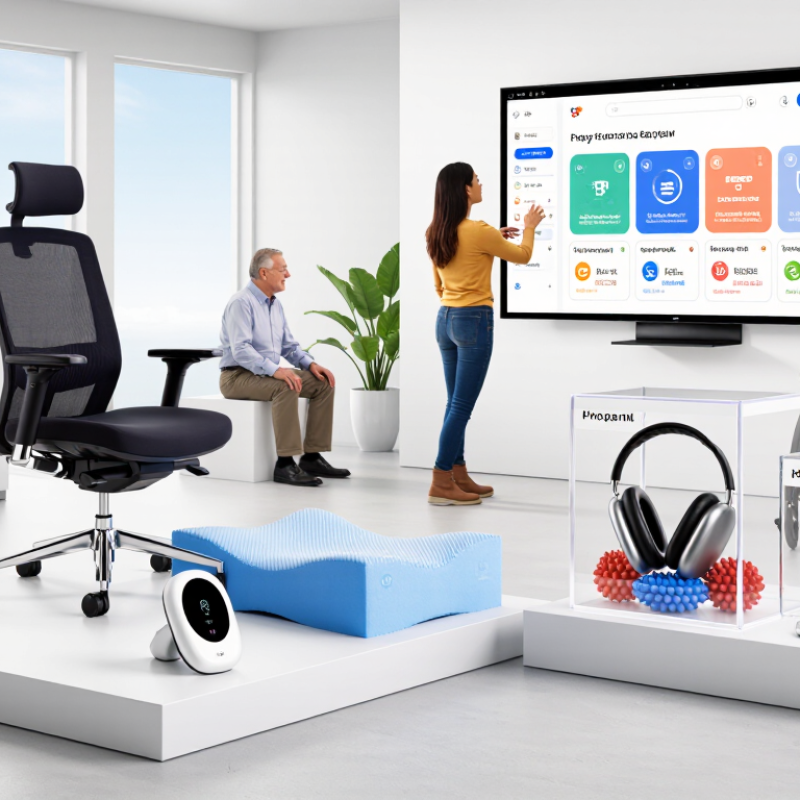
This guide examines practical options, including ergonomic office equipment, sleep-support tools, accessible personal-care products, stress-management kits, and responsibly designed wellness technology. A reliable product should show testing details, material information, data-protection policies, and realistic usage guidance. For example, an adjustable chair should provide stable lumbar support, durable controls, and measurements for different body types. A wellbeing app should explain how it handles personal information.
Real buying experience often reveals details that product pages overlook. Packaging may be difficult to open. Instructions may assume perfect eyesight or strong hand movement. A low price can also hide weak customer support or short product life. These issues matter in homes, workplaces, schools, and care environments.
No ranking is perfect. Needs differ.
Therefore, this 2026 overview balances user experience with professional evaluation. It considers function, safety, inclusivity, sustainability, and long-term value. Readers should still check local standards and consult qualified specialists when health-related decisions are involved. Some emerging products sound impressive but lack independent evidence. That uncertainty deserves attention, not marketing language. By comparing verified features with real-world limitations, buyers can make more confident and responsible Welfare Products decisions.
What Are the 2026 Top Welfare Products for Buyers?
Definition and Scope of Welfare Products in 2026
In 2026, welfare products cover more than gift cards or seasonal packages. They include health services, ergonomic equipment, learning support, family assistance, financial education, and flexible lifestyle benefits. A useful product should solve a daily problem, such as poor desk posture, meal planning, childcare pressure, or rising transport costs. Buyers should examine eligibility, delivery, data protection, accessibility, and measurable employee value.
The scope is expanding because employee needs are becoming less uniform. The Deloitte Global 2024 Gen Z and Millennial Survey found that 40% of Gen Z respondents felt stressed all or most of the time. Among millennials, the figure was 34%. This supports demand for counselling access, recovery tools, and flexible care options. The World Health Organization also estimates that depression and anxiety cost the global economy 12 billion working days annually. Practical welfare products can support prevention, but they cannot replace professional treatment.
Physical products still matter. Adjustable work accessories, sleep-support items, healthy food allowances, and mobility services create visible value at home or work. However, buyers should not confuse attractive packaging with impact. The Gallup State of the Global Workplace 2024 report recorded global employee engagement at only 23%. That suggests many welfare purchases remain poorly connected to workplace reality. Some products look useful but become unused stock. Better evaluation combines adoption rates, employee feedback, inclusion data, and cost per active user. The measurement is imperfect, and that matters.
Buyer-oriented overview of major employee welfare product categories, their practical value, scope, purchasing criteria, and 2026 relevance.
| Rank | Welfare Product Category | Product Definition | Primary Employee Need | Typical Buyer | 2026 Buyer Relevance | Key Purchase Dimensions | Implementation Considerations | Scope Status | Public Evidence or Reference Basis |
|---|---|---|---|---|---|---|---|---|---|
| 1 | Health Insurance and Medical Benefits | Employer-funded or employer-facilitated coverage for medical treatment, preventive care, prescriptions, and hospital services. | Protection against healthcare costs and access to essential treatment. | Medium and large employers, public-sector organizations, and group purchasing schemes. | Very High | Coverage level, employee contribution, dependent coverage, provider access, deductibles, annual limits, preventive-care benefits, and claims administration. | Plans should be reviewed for affordability, network adequacy, data privacy, regulatory compliance, and continuity of care. | Core welfare product | Health coverage remains one of the largest employer benefit expenses in the United States; the 2024 KFF Employer Health Benefits Survey reported average annual premiums of US$8,951 for single coverage and US$25,572 for family coverage. |
| 2 | Mental Health and Employee Assistance Services | Confidential counseling, psychological support, crisis assistance, referral services, and mental-health education. | Stress management, emotional resilience, work-related support, and early intervention. | Employers of all sizes, universities, hospitals, and public institutions. | Very High | Confidentiality, clinical qualifications, response time, multilingual access, digital and in-person options, utilization reporting, and emergency escalation. | Purchasers should separate anonymized utilization reporting from individual clinical information and provide clear crisis pathways. | Core welfare product | The World Health Organization identifies depression and anxiety as significant causes of lost productivity and recommends workplace mental-health promotion and support measures. |
| 3 | Telehealth and Digital Health Access | Remote medical consultations, digital triage, appointment support, health monitoring, and virtual specialist access. | Convenient and faster access to healthcare, especially for remote or shift-based workers. | Distributed workforces, rural employers, shift-based operations, and organizations with limited local healthcare access. | Very High | Clinical scope, licensing coverage, appointment availability, accessibility, cybersecurity, interoperability, and out-of-pocket cost. | Digital services should complement rather than unnecessarily replace urgent, emergency, or in-person clinical care. | Core welfare product | The World Health Organization recognizes digital health and telemedicine as tools that can improve access, continuity, and efficiency when implemented with appropriate governance. |
| 4 | Retirement Savings and Pension Support | Employer contributions, pension arrangements, retirement-plan administration, and retirement education. | Long-term financial security and improved retirement readiness. | Employers seeking retention, financial-wellness support, and competitive total rewards. | Very High | Employer contribution, vesting rules, fees, investment options, portability, enrollment process, fiduciary oversight, and employee education. | Plans should clearly disclose fees and risks and provide understandable information for employees with different financial circumstances. | Core welfare product | The U.S. Bureau of Labor Statistics reported that retirement benefits were available to a majority of private-industry workers in March 2024, confirming the category’s broad role in employee benefits. |
| 5 | Financial Wellness and Emergency Savings | Budgeting education, financial counseling, debt-support tools, emergency-savings programs, and earned-wage access arrangements. | Managing short-term financial pressure and improving financial resilience. | Employers with hourly, early-career, lower-income, or financially diverse workforces. | High | Employee fees, payroll integration, financial education quality, data security, access rules, and potential effects on benefits eligibility. | Programs should be transparent about costs and should not encourage unsuitable borrowing or create avoidable financial dependency. | Core welfare product | The Consumer Financial Protection Bureau has documented the importance of emergency savings and access to liquid funds in household financial resilience. |
| 6 | Paid Leave, Sick Leave, and Family Support | Paid time off, sick leave, parental leave, caregiving leave, bereavement leave, and related absence-management support. | Recovery, caregiving, family responsibilities, and sustainable participation in work. | Employers operating across multiple jurisdictions and organizations competing for skilled workers. | High | Eligibility, accrual, carryover, waiting periods, replacement rate, administration, statutory alignment, and equitable access. | Policies must be aligned with local labor law and communicated consistently to full-time, part-time, temporary, and remote workers where applicable. | Core welfare product | The International Labour Organization identifies paid leave, maternity protection, and social protection as important components of decent work and worker well-being. |
| 7 | Childcare and Caregiving Assistance | Childcare subsidies, backup-care support, dependent-care referral, eldercare assistance, and caregiving guidance. | Reducing work-family conflict and supporting employee retention. | Employers with working parents, caregivers, healthcare staff, and geographically diverse teams. | High | Eligible dependents, reimbursement limits, provider quality, geographic coverage, backup-care availability, and tax treatment. | Buyers should assess provider safeguarding standards, accessibility, emergency procedures, and the practical availability of services. | Core welfare product | The International Labour Organization identifies care policies and services as important for gender equality, decent work, and labor-force participation. |
| 8 | Food, Nutrition, and Meal Support | Meal allowances, workplace meals, food vouchers, nutrition programs, and healthy-eating support. | Daily living support, nutrition, convenience, and reduced workday expenses. | On-site, industrial, logistics, hospitality, healthcare, and shift-based employers. | High | Allowance value, dietary options, geographic usability, tax treatment, payment method, food safety, and accessibility. | Programs should accommodate allergies, religious requirements, disability-related needs, and employees who work away from a central site. | Common welfare product | The World Health Organization recognizes healthy diets and supportive food environments as relevant to noncommunicable-disease prevention and overall well-being. |
| 9 | Transportation and Commuting Benefits | Public-transit support, commuter subsidies, cycling facilities, parking assistance, and mobility allowances. | Lower commuting costs, improved access to work, and reduced transport-related stress. | Urban employers, campuses, industrial sites, and organizations with attendance-based work. | Medium to High | Eligible transport modes, reimbursement limits, geographic coverage, payroll treatment, accessibility, and environmental impact. | Benefits should reflect hybrid-work patterns and should not disadvantage employees who require accessible or nonstandard transport. | Common welfare product | The International Labour Organization links safe, accessible, and sustainable transport with decent work and inclusive participation in employment. |
| 10 | Disability, Life, and Income Protection | Short-term disability, long-term disability, life insurance, accidental-death coverage, and income-replacement protection. | Income continuity for employees and dependents after serious illness, injury, or death. | Employers seeking comprehensive risk protection and continuity of employee income. | High | Benefit amount, waiting period, exclusions, eligibility, portability, beneficiary rules, claims support, and premium sharing. | Terms should be explained in plain language, especially definitions of disability, exclusions, and claims documentation requirements. | Core welfare product | The International Labour Organization identifies social protection, including protection against sickness, disability, and loss of income, as a central element of social security. |
| 11 | Wellness, Fitness, and Preventive Health | Health screenings, fitness support, wellness education, ergonomic programs, and preventive-care incentives. | Health maintenance, injury prevention, healthy behavior, and improved quality of life. | Employers with physical, sedentary, or high-stress work environments. | Medium to High | Evidence base, voluntary participation, accessibility, incentive design, health-data privacy, and inclusion of different ability levels. | Programs should avoid coercive health-data practices and should offer reasonable alternatives for employees who cannot participate in particular activities. | Supporting welfare product | The World Health Organization recommends workplace health-promotion approaches that address physical activity, healthy behavior, occupational risks, and supportive working conditions. |
| 12 | Learning, Reskilling, and Education Assistance | Tuition assistance, professional certification support, language learning, digital-skills training, and career-development programs. | Employability, career mobility, capability development, and long-term job security. | Organizations facing skills shortages, technological change, or internal mobility needs. | High | Eligible courses, reimbursement ceiling, accreditation, time allowance, completion rules, portability, and equal access. | Purchasers should connect learning support to employee development without restricting employees to narrow or outdated skill paths. | Supporting welfare product | The Organisation for Economic Co-operation and Development emphasizes lifelong learning and continuous skills development as important responses to labor-market and technological change. |
| 13 | Flexible Work and Workplace-Comfort Support | Remote-work allowances, ergonomic equipment, flexible scheduling support, coworking access, and workplace-comfort resources. | Safe, productive, and adaptable working conditions across different work arrangements. | Hybrid, remote, project-based, and geographically distributed organizations. | High | Equipment ownership, reimbursement limits, ergonomic assessment, home-office safety, tax treatment, and equal treatment across work locations. | Employers should define responsibility for equipment, maintenance, information security, and workplace health and safety. | Supporting welfare product | The International Labour Organization and World Health Organization both recognize occupational safety, healthy working conditions, and appropriate work organization as important to worker well-being. |
| 14 | Accessibility and Inclusion Services | Assistive technology, workplace adjustments, interpretation, accessibility assessments, and inclusion-related support. | Equal participation, independence, safety, and removal of workplace barriers. | All employers, particularly organizations with public-facing services or regulated inclusion obligations. | High | Accessibility standards, response time, individualized assessment, confidentiality, technology compatibility, and employee feedback. | Services should be designed with users and should cover physical, sensory, cognitive, and digital-access requirements. | Core inclusion product | The United Nations Convention on the Rights of Persons with Disabilities promotes accessibility, reasonable accommodation, and equal participation in employment. |
| 15 | Employee Benefits Administration Platforms | Digital systems for benefit enrollment, allowance management, eligibility verification, communications, and reporting. | Simple access to welfare benefits and lower administrative workload for buyers. | Organizations managing multiple benefit categories, locations, currencies, or employee groups. | High | Data protection, integration, user experience, multilingual support, audit trails, reporting, accessibility, and implementation cost. | Buyers should establish data-minimization rules, role-based access, vendor oversight, service-level commitments, and clear ownership of employee records. | Enabling product | The International Organization for Standardization’s information-security and privacy-management standards provide recognized frameworks for protecting personal data in digital systems. |